

| Design Research |2011 – 2015| Supported by University of Calgary Seed Grant |
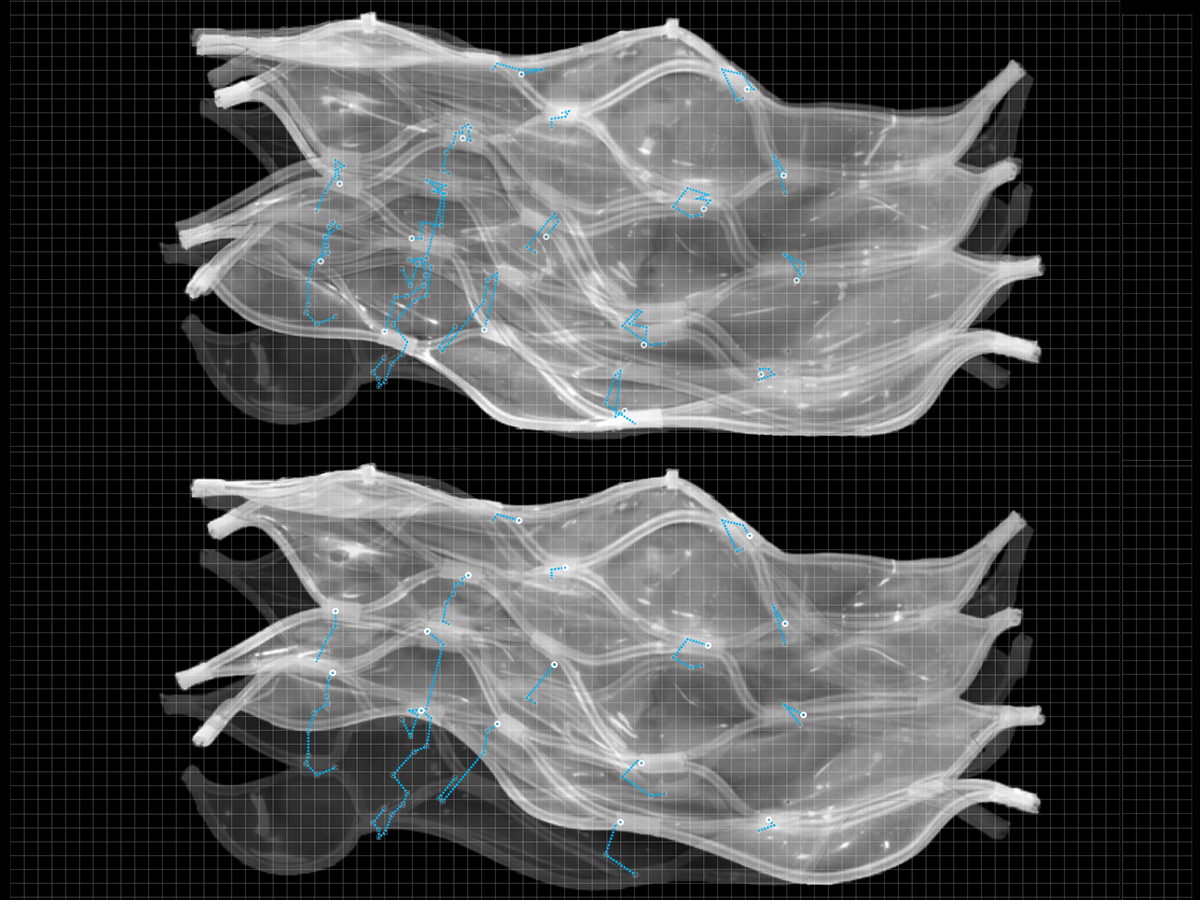
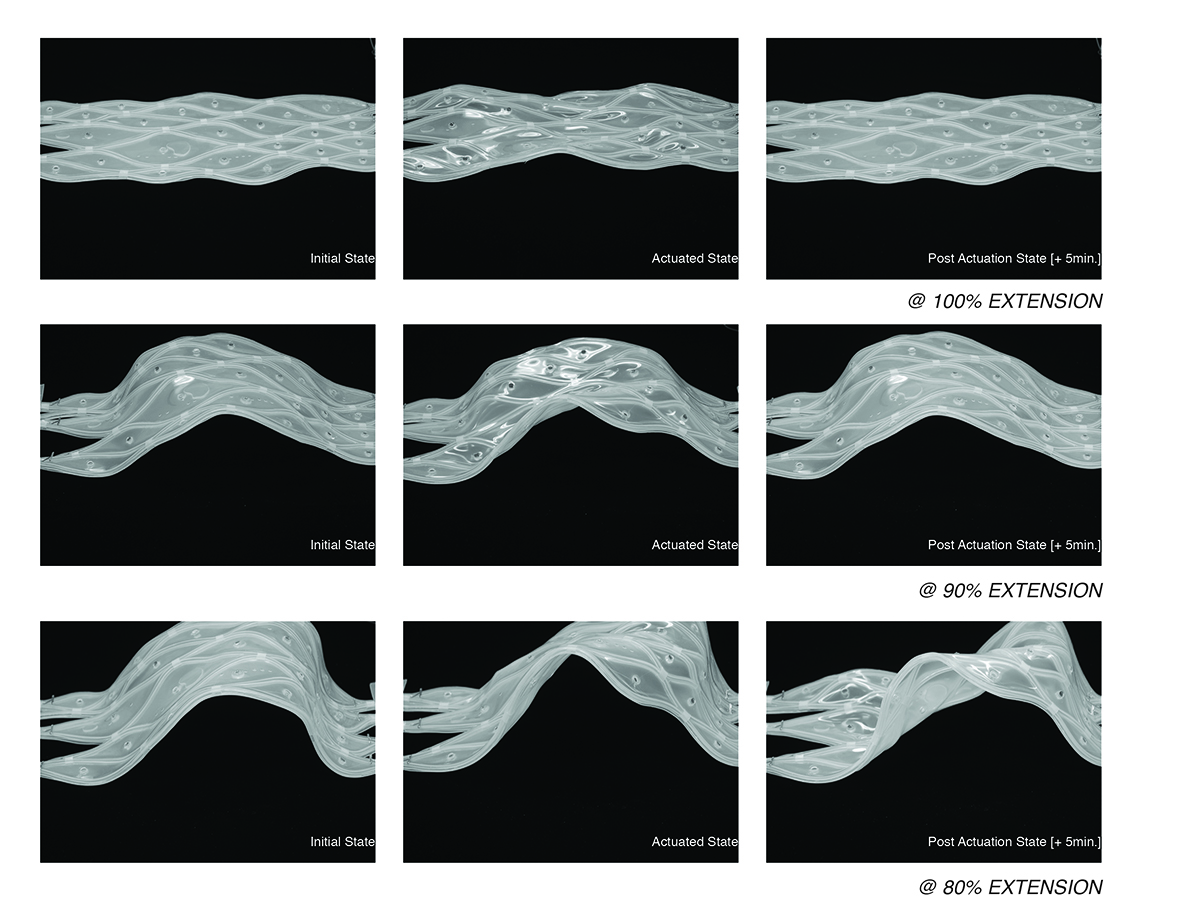
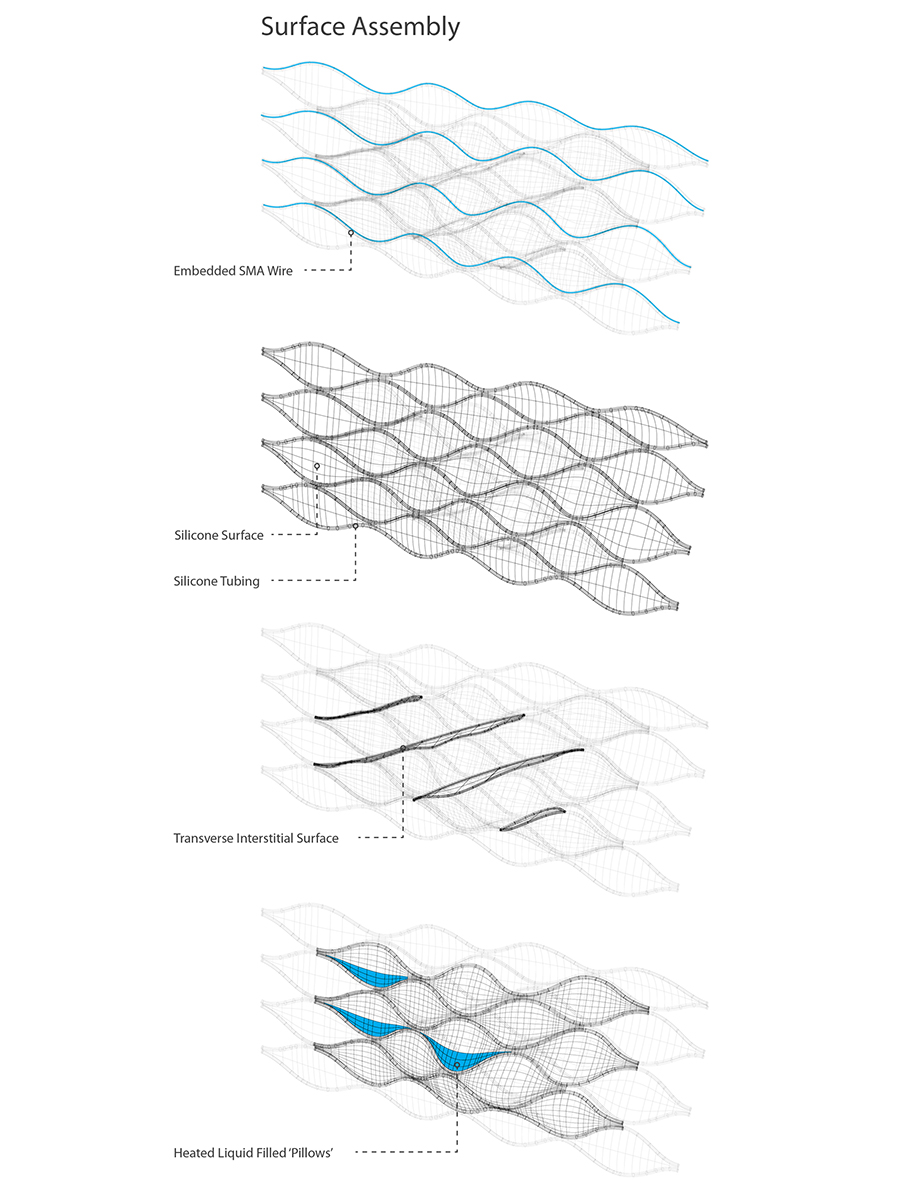
The SKiN project consists of small-scale prototypes of an adaptive kinetic surface capable of spatial modulation and responding to environmental stimuli. The Soft Kinetic Network (SKiN) surface is organized around the network (Soft Kinetic Grid) of embedded “muscle” wires that change shape under electric current. The network of wires, trained to take a sinusoidal shape, provides for a range of motions and facilitates surface transformations through soft and muscle-like movement. The material system developed around the wire network is variable and changes its thickness, stiffness, or permeability within its continuous composite structure. The variability in the material system enables it to (a) behave differently within surface regions; (b) vary the speed and degree of movement; (c) vary surface transparency; and (d) provide other levels of performance such as the capture of heat produced by the muscle wire and the distribution of heat within the surface regions.
The SKiN system is imagined as a building façade system able to heat the air around its boundaries in cold climate regions and, by doing so, increase the vibrancy of public spaces. The façade system would react to the presence of people by activating the shape-memory alloy embedded in the surface. The activation of the ‘muscle’ wires would produce movements in the façade. generated in this process would be captured and utilized to moderate the air temperature around the building, thereby attracting human presence.
| PI and Design Principal: Vera Parlac |
| Research Assistants: Richart Cotter, Todd Freeborn and Adam Onulov|

